Refrigerant contamination is bigger than most workshops think
A candid panel at Wire & Gas 2026 has put hard numbers on a problem many auto air con technicians suspected but couldn’t quantify, refrigerant contamination is running at three to four per cent across sampled vehicles, extrapolating to roughly 850,000 vehicles nationally with some level of contamination under the bonnet.
The figure comes from Refrigerant Reclaim Australia’s (RRA) annual under-bonnet survey, conducted each summer with VASA members. RRA General Manager Kylie Farrelley was careful to frame it as an indicator rather than a hard measurement and noted the member sample likely understates the true scale across the wider market.
A key contamination pathway is closer to home than workshops might assume. Farrelley pointed to shared servicing machines as a risk in their own right, warning that the cylinders inside all-in-one units aren’t always changed between jobs, meaning contamination can move from one vehicle to the next without a technician ever knowing. It only takes about five per cent hydrocarbon content to make a refrigerant mix flammable.
Behind the contamination numbers sits a bigger structural issue. R1234yf currently sits outside Australia’s refrigerant licensing scheme because it isn’t classed as a controlled substance, meaning it can legally be sold in single use cans from general auto retailer shelves.
Australian Refrigeration Council (ARC) technical training manager, Noel Munkman’s core advice to technicians was blunt, use whatever refrigerant the manufacturer specified from the factory. Deviating from this risks voiding warranties, losing manufacturer support and leaving the customer to wear the cost.
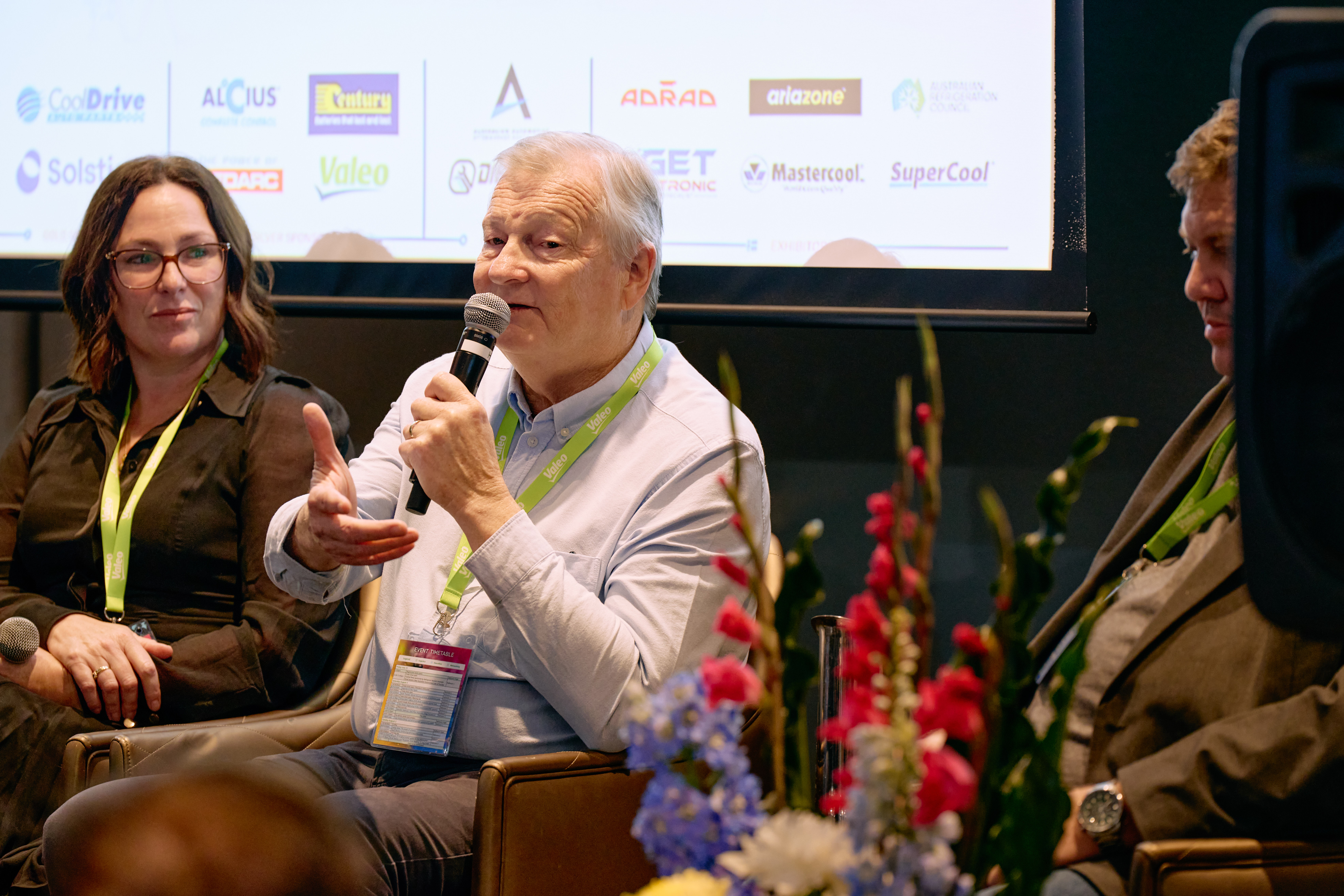
L-R: Kylie Farrelly RRA, Noel Munkman ARC, Greg Pickering.
There’s also a training gap worth flagging to workshop teams. The Certificate II qualification is being rewritten to bring flammable refrigerants into the core curriculum, but there’s no continuing professional development requirement attached to the licence, meaning technicians already in the field can stay licensed without any formal training on R1234yf handling. However, information on the safe use of R1234yf is available on the ARC website at: www.arctick.org/information/autogas/
With a federal consultation on refrigerant regulation (IChEMS) expected in September, the panel’s message to the trade was clear, workshops that want a say in how this gets regulated need to make a submission when the window opens, rather than assuming someone else will raise the issue. Auto Elec & Air Con Magazine will bring further updates when the submissions are open or workshops can email ichems.enquiry@dcceew.gov.au for updates.