BMW and Mini: Footwell Module (FRM) issues
By VACC
Modern vehicles have multiple control units positioned around the car to control various systems. Many BMW and Mini models share the same electrical architecture, which includes a component called the Footwell Module. This unit is a common point of failure that can cause a wide variety of issues. Unfortunately, this module can fail because of basic service procedures that technicians should warn customers about to avoid awkward conversations.
Affected models
- 2006–2011 BMW 1 Series
- 2004–2013 BMW 3 Series
- 2008–2015 BMW X1
- 2009–2015 BMW X5
- 2008–2015 BMW Z4
- 2006–2015 Mini Cooper
- 2006–2014 Mini Clubman
- 2007–2015 Mini Cabrio
- 2010–2015 Mini Coupe
- 2011–2015 Mini Roadster
- 2010–2016 Mini Countryman
- 2012–2016 Mini Paceman
- 2005–2013 Mini One
In 1994, BMW bought the Rover Group, which owned the Mini brand. In 1998, BMW began planning the new Mini, as the last traditional-design Minis were sold in 2000. The new generation of Mini, based on BMW running gear and components, went on sale in 2001 and was a roaring success.
Overview
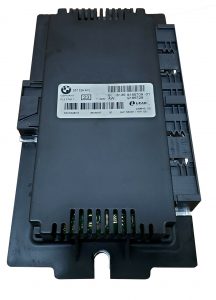
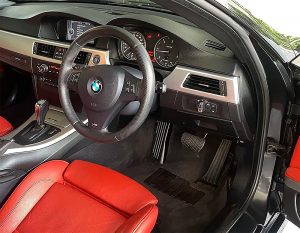
From about 2003 onwards, BMW introduced a Footwell Module into many BMW and Mini models. This unit has an identification code of FRM (possibly a German abbreviation) and is made by Lear. It is well named, as it is located in the RH footwell.
This Footwell Module acts as an extension of the BCM (Body Control Module). It can control the following functions, or more depending on the options fitted:
- Indicators
- Headlights
- Taillights
- Adaptive headlight stepper motors
- Fog lights
- Centre high-mounted stop lamp
- Central locking system
- Interior lights
- Courtesy lighting
- Power windows
- Service lights
- HVAC blower fan
- Exterior mirrors
- CAN communication
The trouble
The Footwell Module in these models seems to start playing up after about 10 years of trouble-free motoring. The issues seem to begin with a loss of power supply from a flat battery, a battery replacement or a battery disconnection for other maintenance tasks. We have also heard reports from the trade that connecting a diagnostic tool and allowing it to search the vehicle’s control units for faults, or updating software, can trigger the Footwell Module to stop working.
The cause seems to be a fault within the module or its software that prevents the unit from powering up once the power supply has been removed.
Note: This seems similar to the FG Falcon and Territory, which have issues with their ICC units not working after a power supply disconnection. See Tech Talk September 2018, page 4576.
If this fault is triggered, the systems controlled by the Footwell Module may not work or may enter a fail-safe lighting mode. The vehicle may record one or all of the following diagnostic codes:
- 497F: Message Error (status, reverse gear, 0x3B0) Diesel Electronics Receiver Footwell Module Transmitter
- A3B4: Message (lighting condition) Incorrectly, Transmitter FRM Permanent
- A3C1: Message (FRM foot space module) Incorrectly received by COMBI, Transmitter FRM Permanent
- E72B: Window error
- E72C: Window error
Note: These are BMW-specific codes. A compatible diagnostic tool will be required to access them.
The solution
You should complete a thorough diagnostic check of the power supply, earth points, wiring harness and connectors to and from this unit. Once you have eliminated any issue in the vehicle, the Footwell Module may be at fault.
This seems to be a worldwide issue. First, contact the dealership to check for warranty coverage. Next, ask for the price of a new unit, which may be a four-figure sum.
Then contact your preferred automotive ECU repair company. This seems to be a well-known fault that is easy to repair. Depending on the model and specification, they may require you to send the Footwell Module and other security modules to them. A repair or changeover unit might be only a low to mid-range three-figure sum.
If you are working on one of these vehicles, discuss this potential problem with the owner before any work that might interrupt the power supply or require the use of a diagnostic tool. At least this way, they are prepared for the extra costs.
If the vehicle is about 10 years old, you could suggest the customer has their Footwell Module removed and updated as preventative maintenance to avoid future issues.
Some say there is an internal fault. Others say a counter in the software needs resetting. Either way, it can be fixed.
For more information about common faults and fixes, log on to VACC MotorTech and look in the SmartCASE section of HaynesPro, or call VACC’s TechAdvisory Service.
This article first appeared in the June 2022 issue of VACC’s TechTalk magazine. TechTalk is available with a VACC membership or a subscription to VACC MotorTech.
For more technical content and diagnostic know-how, subscribe to Auto Elec & Air Con Magazine.