Engine Claim Rejected. Incorrect Use of Vehicle
By Clinton Brett, Diesel Help Australia
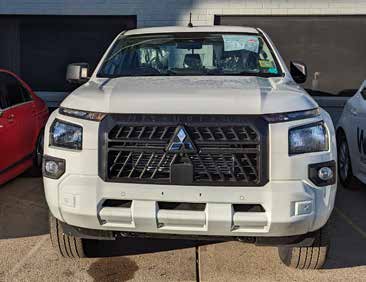
A 2025 Mitsubishi Triton with just 300 kilometres on the clock was brought into a dealership with a misfire. The owner expected it to be covered under warranty. It wasn’t.
The diesel engine has been claimed as one of the most economical engines. Unfortunately, with stringent emissions laws, rising fuel prices and a change in the demographics of diesel owners, service costs have increased and no longer meet some drivers’ expectations.
Since starting Diesel Help Australia 13 years ago, my time dealing directly with diesel owners has been greatly reduced. But that’s not to say I don’t know how they operate. I am an observer, a people watcher, particularly diesel owners.
These observations, combined with thousands of diesel diagnostics in my career, have led to an obsession with diesel and the individual human’s perception of their beloved fuel-efficient, awesome towing capacity vehicle, yet now what is becoming a costly purchase.
But what if you could reduce the cost for your customers simply by educating them on the correct treatment of their diesel vehicle? How to drive it and a personalised service schedule.
Diesel Driver Profiles (DDP)
What started out as a personal tool to assist with creating hundreds of technical bulletins and training has become a tool I use daily to reduce diagnostic time for members. I have established several trends that can also be a helpful guide for your diesel owner customers.
Based on several stereotypes of diesel owners and drivers, I created the Diesel Driver Profile. Most manufacturers have two types of servicing, normal and severe. I believe there is a need to provide owners with more service options to assist with budgeting and how long they want to own the car. Witnessing certain failures, faults or worn components, I have linked them to driving style, distances and time travelled, family status, employment status, social network, hobbies, destination, location, temperature, altitude, type of holidays and recreation, gender and unique habits.
Vehicle: Mitsubishi Triton 2025
I’ll share an extreme case recently provided by one of our members. Without knowing exactly what their diesel ute was used for, based on the information provided, I imagine the owner to be a Bunnings gardener, weekend use only, average 20km distance, rarely exceeding 60km/h.
Odometer reading: 300kms
Location: Country Victoria. Annual daily temperatures average around a max of 17.5°C and a minimum of 7.1°C. Elevation around 435m above sea level.
The vehicle was reported to have been used for one year since its purchase brand new. Use involved stop-start idling in and out of the driveway and the occasional short trip to nearby shops.
This is what I consider inappropriate diesel engine use. Extended idle, short trips and no load put on the vehicle. A misfire became evident and the owner booked the vehicle into the dealership, expecting the new car warranty to cover it. As soon as the dealer workshop had established the operating conditions, the claim was rejected, the car had been operated inappropriately.
As a diesel fuel injection specialist for over 30 years, it’s not uncommon to witness this. Cold corrosion is the result of a poor chemical reaction between oxygen and diesel fuel. It’s as damaging as hydrochloric acid in the engine. This is when sulphur in diesel fuel doesn’t work because the engine conditions are not met. It’s too cold too often.
Diesel is a thermal combustion engine, meaning increased temperatures are required for effective and efficient burn to take place. When the engine is rarely operated under load conditions, rather than burning clean from the exhaust, the atomised fuel remains in the cylinder as a liquid on vital metal components. Overnight, temperatures drop and that’s when the equivalent of hydrochloric acid intervenes.
Unfortunately, this is not service advice you could provide to the customer. The only advice would be to reconsider owning a diesel and look at purchasing a PHEV type vehicle. A diesel is not the right choice for this style of use.
Outcome: The engine was replaced at the dealership, at the customer’s expense.
For more information about our services to vehicle workshops, visit www.dieselhelp.com.au
Get every issue delivered.
Australia’s trade journal for auto electricians and aircon specialists.