EV uptake and renewable growth help drive emissions decline
Australia’s greenhouse gas emissions have fallen to their lowest level since the COVID-19 pandemic, with growing electric vehicle adoption and expanding renewable energy generation contributing to the decline.
New national greenhouse gas inventory data released by the Australian Government showed emissions fell 2.1 per cent in the year to December 2025, while transport emissions declined for a second consecutive quarter.
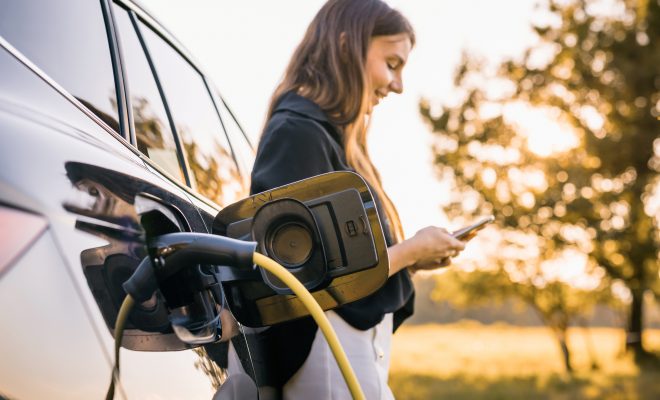
The reduction comes as electric vehicle sales continue accelerating across Australia. Battery electric vehicles accounted for a record 20 per cent of all new vehicle sales in May 2026, while electrified vehicles overall reached 46 per cent market share.
Transport emissions begin to fall
Transport emissions declined by 0.6 per cent during the period, marking the first sustained reduction outside pandemic conditions.
“Our transport activity is going up; however, emissions have started to fall,” Anna Malos, Climate Policy Expert at the Climateworks Centre said.
“It’s a shift in particular from petrol vehicles to electric vehicles, and if that continues, then that is really the first time outside of COVID that we’ve had that fall in transport.”
“There are really hopeful signs in that latest report that Australia is making progress towards its emissions reduction targets.”
The National Automotive Leasing and Salary Packaging Association (NALSPA) said the Federal Government’s Electric Car Discount was also contributing to stronger EV uptake and lower transport emissions.
“The Government’s data shows transport emissions are falling as more Australians reach for the electric charger instead of the fuel bowser by switching to EVs,” said Rohan Martin, Chief Executive of the National Automotive Leasing and Salary Packaging Association. “The Electric Car Discount is helping make that transition possible.
“This is a policy that continues to put EVs within reach of everyday Australians – nurses, teachers, and tradies who wouldn’t otherwise be able to afford one. The outer suburbs are booming with cleaner, cheaper-to-run cars thanks to the Electric Car Discount.”
Mr Martin said the policy was delivering on its original objectives.
“This is exactly what the Electric Car Discount was designed to achieve – more EVs on the road, lower transport emissions and lower household running costs, and it’s helping stabilise the grid,” he said.
“The Albanese Government should take this emissions data as further validation and proof that the EV Discount is working as intended.”
Renewable energy and batteries reduce electricity emissions
Electricity generation remains Australia’s largest emissions source, accounting for 31.8 per cent of total emissions, but the sector continued its long-term downward trend.
Electricity sector emissions fell 3.8 per cent over the year to December 2025 and are now down 25.8 per cent compared with 2005 levels.
“Good progress over the year, in particular in decarbonisation of electricity supply,” said Frank Jotzo, Professor of Climate Change Economics at the Australian National University.
“That’s where the largest amount of the overall national emissions reductions come from.”
Wind generation increased by a record 22.6 per cent during the year, while battery storage capacity continued expanding rapidly.
The report noted battery discharge across the National Electricity Market increased by 200 per cent in the year to December 2025, contributing to a 30 per cent reduction in gas generation during evening peak demand periods.
“If we take stock of this, we can start to see the finish line, and a couple of ways to get there. That is super exciting,” Carl Binning, Executive General Manager of the Clean Energy Regulator said.
More work needed to meet targets
Despite the improvement, the report highlighted the scale of the challenge still facing Australia in meeting its emissions targets.
Australia has committed under the Paris Climate Agreement to cut emissions by 43 per cent below 2005 levels by 2030 and by 62–70 per cent by 2035.
The latest inventory data showed Australia has already used 58 per cent of its Paris emissions budget while only 55 per cent of the reporting period has elapsed.
“Overall, that 2030 target of 43 per cent reduction on 2005 levels, that does remain in reach, but there definitely needs to be more effort, and not all the signs are positive,” Malos said.
“We need to act decisively to shift to clean energy… not only to achieve those emission reduction targets, but also to position our economy favourably in a world that will unavoidably shift to cleaner economy settings,” Mr Jotzo said.
Source AFMA