Proposed 2028 cut-off for R134a in new cars
Workshops could be servicing the last new R134a vehicles within two years, with the federal government proposing to stop new passenger vehicles arriving charged with the refrigerant from 1 January 2028.
The proposal is part of a set of draft standards released by the Department of Climate Change, Energy, the Environment and Water (DCCEEW) under the Industrial Chemicals Environmental Management Standard, known as IChEMS. Consultation opened on 21 September and closes at 5pm AEDT on Friday 23 October 2026.
Under the draft, new passenger vehicles could not be imported charged with an HFC refrigerant that has a global warming potential (GWP) of 150 or more. R134a sits at 1430. The standard would also stop a new passenger vehicle system being charged with R134a after it lands.
Why now
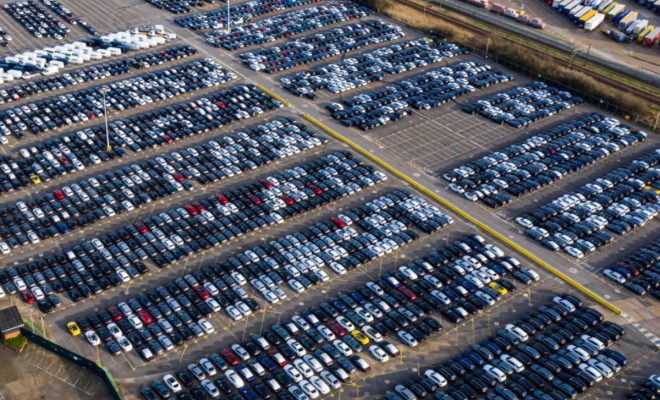
Australia’s HFC phase-down caps bulk refrigerant imports, cutting them by 85 per cent between 2018 and 2036. Pre-charged equipment, including new cars, sits outside that cap. Vehicles have kept arriving with R134a, each one adding to service demand for a refrigerant that is getting harder to source. Many of the major markets supplying vehicles to Australia, including Japan, the EU, the US and the UK, already restrict R134a in new cars.
What it means for your workshop
The proposal doesn’t stop you servicing existing R134a vehicles. Equipment in use before 1 January 2028 can still be serviced with R134a where the manufacturer specifies it. But with new R134a vehicles set to keep arriving until the end of 2027, demand for the gas will carry on for years from a supply that keeps shrinking.
Speaking at VASA’s Wire & Gas conference in August, DCCEEW’s Dr Paul Taylor was direct about the cost outlook.
“R134a is becoming more expensive,” he said.
He also indicated quota settings won’t be changing, which makes recovery and reclamation a commercial decision as much as a compliance one.
R1234yf gets handling rules
A second proposal would place obligations on HFOs, including R1234yf, from 1 January 2027. Anyone importing, using or disposing of them would need to avoid intentional release and prevent leaks during use and disposal. They would also need to manage the product responsibly. In practice that means recovering rather than venting, fixing leaks, returning used gas for reclamation and keeping records.
Retrofits still an open question
There’s no settled answer yet on what replaces R134a in existing systems. DCCEEW has ruled out hydrocarbons as a safe retrofit, while R513A and R1234yf retrofits are under discussion. A trainer at Wire & Gas also pointed out that the retrofit unit of competence dropped out of training programs after the R12 changeover, so technicians may need retraining.
Buses and coaches, motorhomes, caravans, marine vessels and off-road plant are classed as large mobile air conditioning and keep access to HFCs, subject to review after 1 January 2032.
Have your say
Submissions are made through DCCEEW’s Have Your Say portal at consult.dcceew.gov.au. A public webinar runs on Wednesday 30 September from 2pm AEST, with questions accepted in advance at ichems.enquiry@dcceew.gov.au.
Stay across the refrigerant changeover as it unfolds. Subscribe to Auto Elec & Air Con Magazine today.