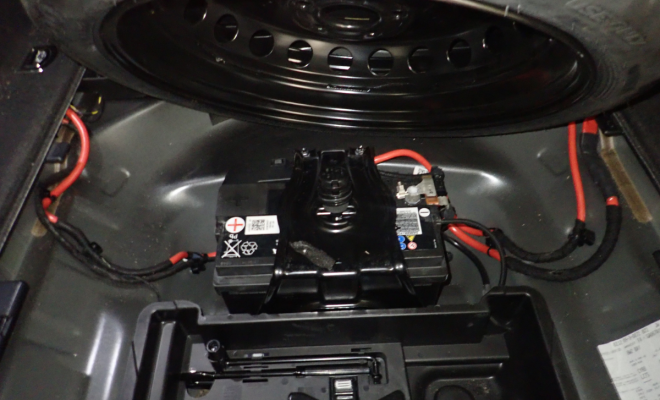
Battery programming explained
By VACC TechTalk
When it comes time to fit a new 12 volt battery to a car, one battery looks very similar to another and if it is about the correct physical size and the terminals are in the right place, it should be good enough. You might have been able to get away with this sort of thing in the past, but now you might be about to cause trouble for the customer and yourself. There are now many different sorts of batteries designed to accommodate the new features fitted to modern vehicles. This article provides an overview of the various batteries available and the programming that may be required.
There are many different types of batteries in the automotive world, but this article will only cover the three most common 12 volt types, without delving into the Lithium-Ion and Nickel-Metal-Hydride traction batteries used in hybrid and electric vehicles.
Lead Acid Batteries
The wet-cell lead-acid battery has been used for many years. It is typically made of six cells with a liquid electrolyte solution of sulphuric acid and water and supplies a voltage of 12.6V at full charge. These are now referred to as Starting, Lighting, Ignition (SLI) batteries, as more advanced types of batteries are required to run the new features on modern vehicles, which the SLI battery is not compatible with.
Enhanced Flooded Battery (EFB)
An EFB is a high-performance version of a wet cell battery that has been optimised to allow for some of the earlier stop-start systems. These EFBs have been sealed to eliminate maintenance and enable more charging cycles.
Absorbent Glass Mat Battery (AGM)
The structure of an AGM battery is similar to a SLI battery. However, the electrolyte is bound in a glass fibre separator, making it allegedly leak-proof. An AGM battery can charge up to 5 times faster and withstand 3 times as many cycles as a conventional battery. They are used on modern vehicles with a stop-start system. Unfortunately, they are more expensive than a conventional SLI battery. They can be impacted by heat, so are typically not fitted in the engine bay.
Battery Energy Management Systems
Mechanically, the alternator has not changed much since its introduction. However, the way it is controlled has advanced to meet the demands of increased loads, such as heated and cooled seats, power tailgates, infotainment and navigation systems, while also reducing the parasitic load on the engine to reduce emissions. To achieve these goals, Smart or PCM-controlled charging systems have been introduced.
The introduction of start-stop systems and EFB and AGM batteries has now required the use of Battery Energy Management (BEM) systems, which are also called Battery Management Systems (BMS) to ensure the vehicle operates correctly. Most vehicles with stop-start systems and BEM can be identified by the fitments of battery current sensors on the negative battery terminal.
These sensors measure current flow and use this information to determine the battery’s State of Charge (SOC). From this, the BEM system will calculate how much charge the alternator must provide to run the car and keep the battery charged, while minimising emissions.
For this system to work, the BEM system needs to know the size and type of the battery fitted. So, when replacing a battery, use one of the same design and specification as specified by the manufacturer. This means if it has an AGM, you will need another AGM of the same capacity, same as EFB, for another EFB.
You will then need to update the BEM/BMS system to indicate that a new battery has been installed. There might be a procedure to follow so the control units can read the new battery’s SOC, preventing the system from over- or undercharging the battery. Which brings us to the difference between battery programming and registration/coding.
Battery Programming
Some systems will allow you to upgrade to a larger capacity battery or one of a different design; this will require battery programming. Depending on the manufacturer, you will have to enter the new battery’s Make, Model, Part Number, CCA, RC and other details so the system can accommodate the new battery’s specifications.
Battery Registration/Coding
If you are replacing a battery with one of the same specifications, you will still have to tell the BEM system that a new battery has been installed. This is so the system will update its stored SOC reading to the full charged new battery from the possibly flat old battery. Unfortunately, there seem to be two different types of BEM systems.
Open BEM Systems
Many vehicle manufacturers use an “Open” BEM system, allowing independent workshops to fit replacement batteries with a compatible diagnostic tool.
Closed BEM Systems
It seems that Volkswagen Group vehicles, such as Volkswagen, Audi, SEAT, and Skoda, require a compatible diagnostic tool with the correct software to enter a BEM code found on a sticker on compatible batteries.
The sticker will usually have a QR code and will have various numbers as follows.
- The first line is the Part Number.
- Next is the battery’s serial number. Only use the last 10 digits.
- The vendor code, which is 3 digits on the bottom line.
NOTE: After-market batteries may not have valid numbers.
No matter which type of BEM system you are dealing with, it is highly recommended to program or code the battery to the vehicle to ensure the charging system can operate correctly. Some vehicles might eventually relearn the SOC and other parameters, but the customer might notice some systems not working correctly in the meantime.
For more information on battery programming or registration requirements, check with your preferred battery supplier. VACC MotorTech also has procedures online, or you can call VACC’s TechAdvisory Service for assistance.
This is an updated version of an article that first appeared in VACC’s TechTalk magazine in August 2022. VACC TechTalk can be accessed with a VACC membership or a VACC MotorTech subscription.